
Around The World, Children Are Losing Their Right to Learn
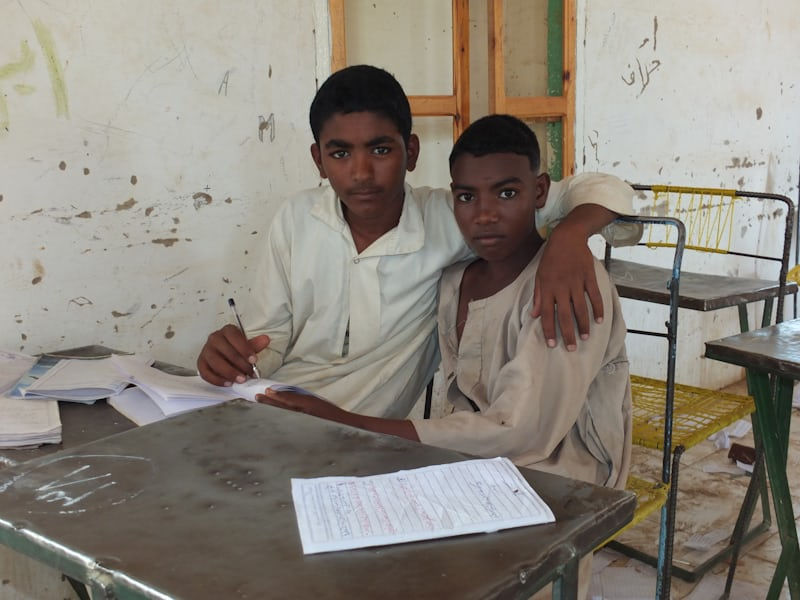
The number of children and young people out of school has risen for the seventh consecutive year, reaching 273 million. This is the main finding of UNESCO’s 2026 Global Education Monitoring Report one in six children of school age worldwide are now excluded from education, and only two in three students complete secondary school.
This is not a trend from years ago. This is happening right now. And it is happening in specific places, to specific children, for reasons the world cannot afford to ignore.
Here is what is happening country by country today.
Sudan The World’s Largest Education Emergency
Sudan holds the most devastating education crisis on the planet right currently.
90 percent of schools have closed across the country due to the ongoing civil war, leaving an estimated 19 million children out of school.
The violence against children and their schools has been systematic and horrific. Attacks on schools increased fourfold in the conflict’s first 12 months, with 88 reported violent incidents resulting in the killing and injuring of students and teachers, torture, abductions, and sexual violence against students inside school facilities.in December 2025, a nursery and hospital were attacked, killing dozens of children.
Even as some schools reopen, the crisis remains staggering. While updated estimates indicate that 65 percent of schools countrywide were open again by January 2026, 7.9 million children remain out of school. Where schools have gradually reopened, many still lack basic infrastructure and learning materials.
Sudan’s crisis is being ignored by much of the world. At the start of 2024, media coverage of Sudan averaged 600 new articles per month, compared with more than 100,000 on Gaza and Ukraine. In June 2025, humanitarian actors were forced to reduce their funding request for education in Sudan by 90 percent amid sweeping cuts to foreign aid.
Sudan’s children are suffering in near silence. They deserve to be heard.
Gaza A Generation With No Classroom Left
In Gaza, the education system has been almost entirely wiped out.
More than two years of relentless bombardment has left the education system in Gaza completely unrecognizable, with more than 97 percent of schools either damaged or destroyed. A study by the University of Cambridge estimates that children in Gaza will have lost the equivalent of five years of education due to repeated school closures since 2020.
The destruction of over 95 percent of educational facilities has left over 660,000 children nearly all of Gaza’s school aged population out of schools, and forced 88,000 higher education students to put their studies on hold.
In Gaza alone, tens of thousands of children have been killed. Most young people have had zero access to in person education for more than two years while schools and universities have been destroyed.
Makeshift responses are emerging in the rubble. More than 68,000 children in Gaza have been reached through temporary learning spaces offering education and psychosocial support.
Democratic Republic of Congo 8 Million Left Behind
In the eastern DRC, escalating violence is pushing an already fragile education system to the brink.
Widespread destruction in the affected areas has severely disrupted access to basic social services and livelihoods. Children are bearing the brunt of the crisis facing insecurity, trauma, displacement, hunger, and heightened protection risks including gender-based violence. Adolescent girls are especially at risk. Nationwide, 8 million children remain out of school.
Sub Saharan Africa Half the World’s Out of-School Children
Across the African continent, the numbers are staggering.
In sub Saharan Africa, fewer than one in four children of pre-primary age are enrolled in school. For many of these children, cost remains the primary barrier. While primary education is nearly universally free, families are often required to pay for preschool and secondary schooling. In Uganda, where there is no publicly funded preschool system, a majority of children miss out because private preschool fees are prohibitively expensive for most families.
Among the countries most at risk from funding cuts, Côte d’Ivoire and Mali face some of the greatest dangers, with school enrollment at risk of declining by 4 percent equivalent to 340,000 and 180,000 students respectively.
India A Gender Gap That Persists
India is home to one of the world’s largest education access gaps, particularly for girls.
Over 1.17 million children are out of school across India. A persistent gender gap remains, with female literacy at 69.4 percent compared to male literacy at 84.7 percent driven by cultural norms that pull girls from classrooms for household duties.The urban-rural literacy gap is also stark, with rural schools lacking basics like electricity.
United States The Crisis at Home
Even in one of the wealthiest nations on earth, underprivileged children are falling through the cracks.
In the United States, 3 out of 4 education indicators have worsened since 2019, with preschool participation below pre pandemic levels, declining reading and math scores, and chronic absenteeism affecting millions. This disproportionately impacts over 11 million children living in poverty. In high poverty districts, chronic absenteeism rates exceed 25 percent.
In rural areas like Appalachia and urban centers like Detroit, where child poverty exceeds 30 percent, kids as young as five miss out on early interventions due to the cost of basics like transportation or meals.
What WFI Is Doing
We work across crisis affected and underprivileged communities to make sure that no matter where a child is born whether in a war zone, a refugee camp, a rural village, or an underfunded urban school they have access to education, safety, and hope.
Establishing safe learning spaces in areas where schools no longer exist
Covering school fees and supplies so poverty is never a reason to drop out
Supporting girls specifically fighting the cultural and economic barriers that push girls out first
Providing trauma informed education for children who have witnessed violence
Advocating globally for funding, policy change, and the protection of schools
Every Child. Every Country. Every Day.
The crisis is global. The urgency is now. And the solution starts with people like you choosing to act.